
Indoor Environmental Investigation
The holistic approach to solving your air quality problems.
EnviroHealth takes pride in our investigation thoroughness. We believe that every investigation should first prioritize the actual visual inspection.
A proper indoor environmental investigation requires a solid foundation of the mechanical systems, air pressure, physics, building envelope, chemistry, and microbiology. This is what makes EnviroHealth special.
The difference between a mold investigation and an indoor environmental investigation
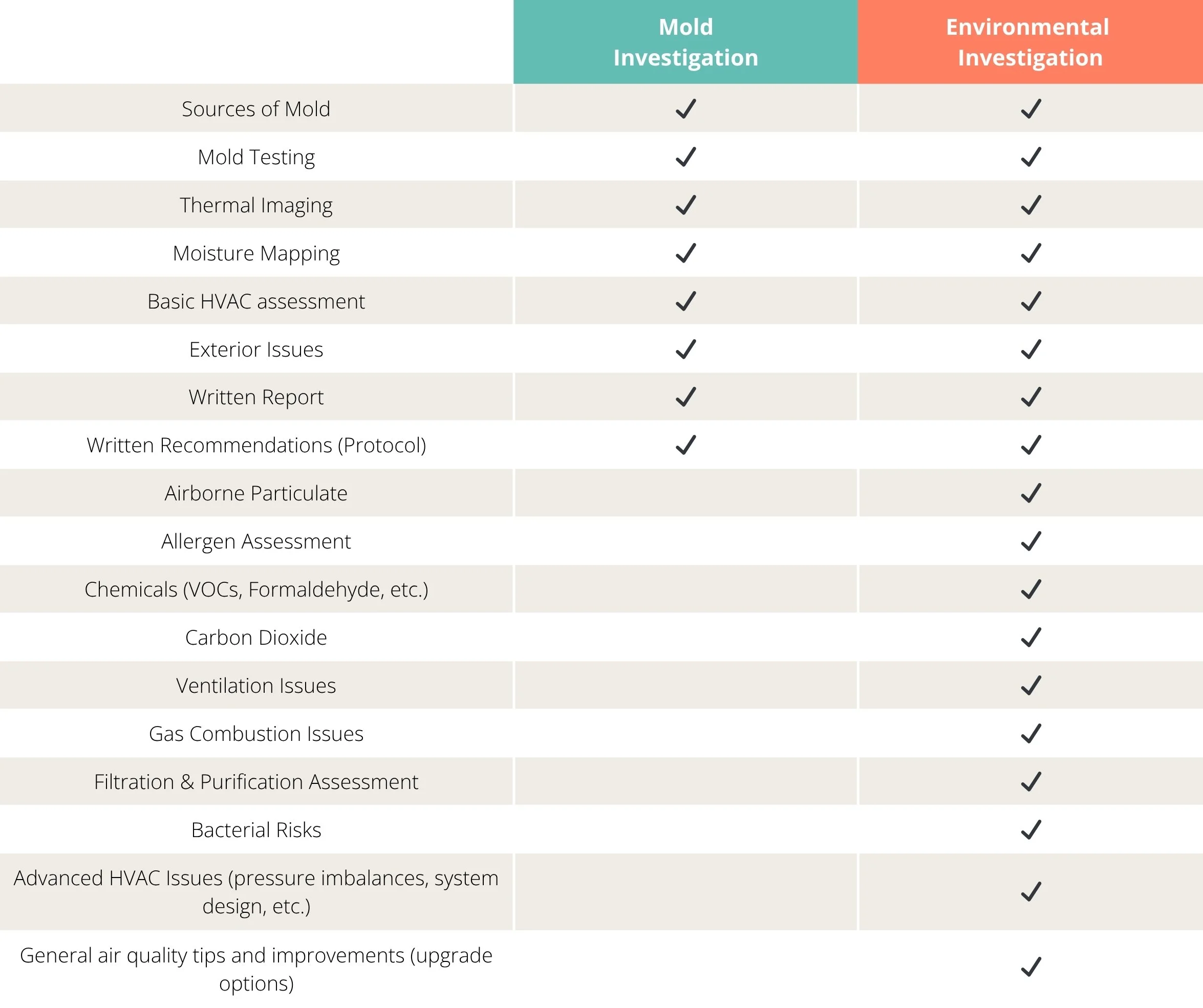
An indoor environmental investigation is a holistic method for performing a thorough investigation of the building’s general air quality that may include a variety of tests, readings, and physical assessments of possible mold, air pressure issues, HVAC functionality, humidity problems, VOC and particulate readings, and much more.
During your investigation with EnviroHealth, we conduct a visual investigation, gather data, and translate that data into an easy-to-read report. Included in that report are recommendations on how you may be able to alleviate the problems, and in turn, make your home or building a safer indoor environment.
What types of things might the indoor environmental investigation look for?
Issues with the building that could cause mold
Bacterial risks
Potential allergens
VOCs and their potential sources
Combustion appliances
Particulate readings
General air pressure issues
Issues that could potentially cause high humidity
Issues that could cause condensation
General HVAC function and design assessment
Ventilation issues
Filtration and air purification issues
Moisture problems
Behaviors that can cause air quality issues
General education on the use of your home or building
Air infiltration issues
General IAQ problems
General tips and strategies for improving air quality
Potential add-on testing:
Mold sampling (via dust, air, direct, etc.)
Bacteria sampling
VOC sampling (on-site measurements or lab analysis)
Formaldehyde testing
Blower door testing
Particulate identification